(Ministry of the Environment, Agriculture and Sustainability)
Website: mediambient.ad/setmana-europea-prevencio
Twitter: @governandorra
Facebook: @govern.ad
Contact: M. Carmen Gutierrez Rodriguez – residus@govern.ad
ARC+

The European Week for Waste Reduction (EWWR) is the biggest campaign on waste reduction in Europe. Driven by local and regional public authorities, we bring together all sorts of other actors — citizens, schools, businesses, NGOs, associations — who organise activities to raise awareness about the different challenges and impacts of resource use and management, proposing waste reduction as a common approach.
The Week, as we otherwise call it, is just that: a week in November, normally the penultimate or last week of the month. What makes it special are the efforts and passion invested by the thousands and thousands of volunteers who raise awareness, engage and act for sustainable and circular consumption and production in their communities.
Waste prevention starts long before something becomes waste. It starts with the choices we make about what we buy, how we use products, how long we keep them, and what we do with them when we no longer need them.
The European Week for Waste Reduction puts waste prevention at the heart of the waste hierarchy. The familiar 3Rs — Reduce, Reuse, Recycle — provide a simple starting point. But preventing waste requires us to look beyond these three actions and rethink the entire way we produce, consume and use resources.
The EWWR Steering Committee is the group of organisations that makes all the strategic decisions about the project and finances it.
ARC+
ADEME

AICA

ARC
Bruxelles Environnement
Eastern Midlands Waste Region

European Committee of the Regions

Gouvernemente Princier Principaute de Monaco Direction de l’Environnement
Lipor
Wasteserv
Zero Wate Europe
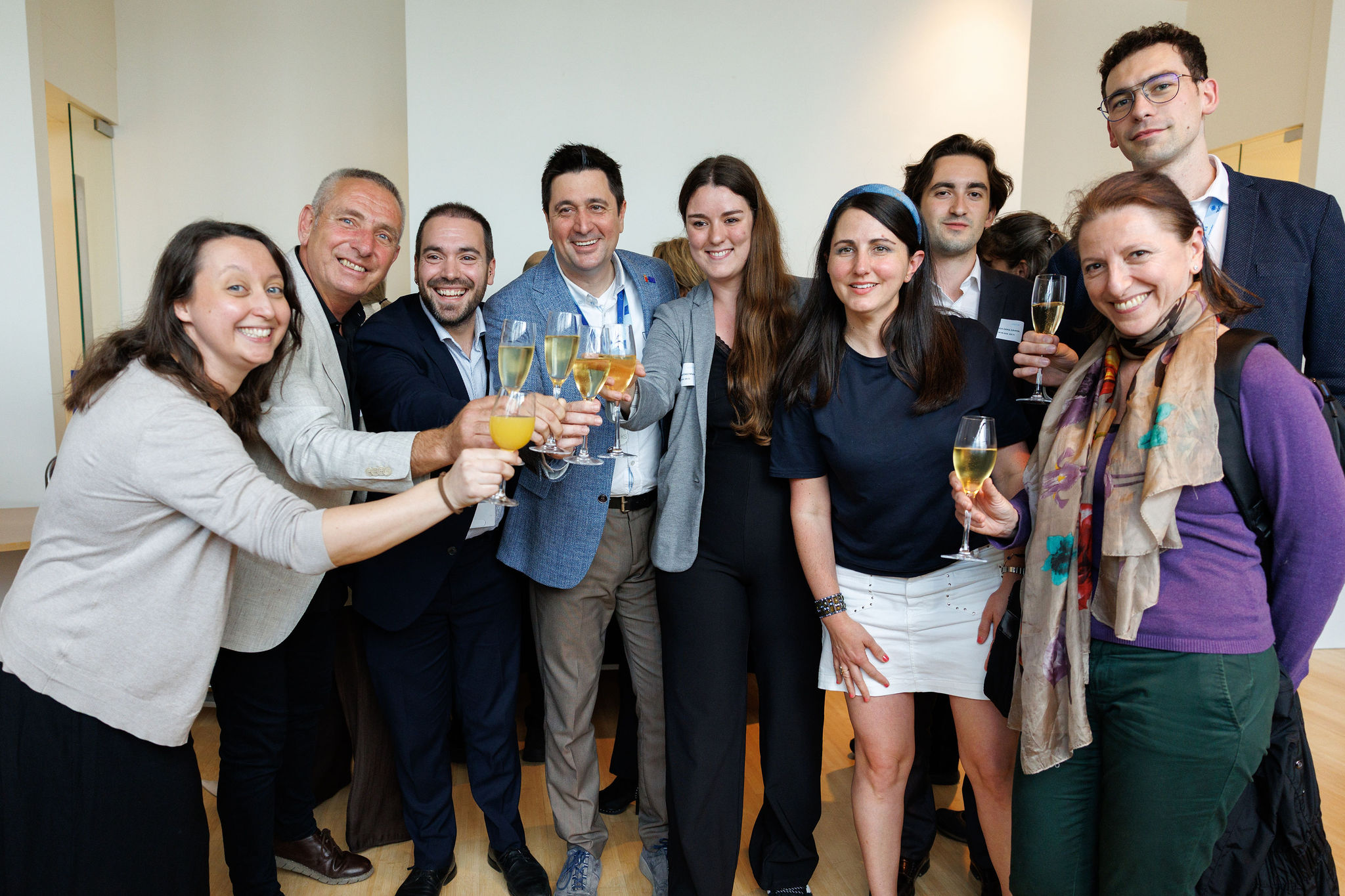
The Steering Committee is open to public (or publicly owned) authorities and organisations (national, regional or local level) involved in the sector of sustainable resources management and waste reduction.
Non-profit organisations with a strong expertise on stakeholder engagement and raising awareness communication are also welcomed.
Joining the Steering Committees means accepting the following commitments:
Interested organisations can fill the Steering Committee Commitment Charter and send it to the European Coordinator (contact@ewwr.eu), which will evaluate the application and reply within one week.
Europe’s growing demand for resources is putting increasing pressure on the environment, climate, and our economy. Every product we buy requires raw materials, energy, and water to be produced, transported, and used. When products are discarded too soon, these valuable resources are lost, and more waste is generated.
The challenge goes far beyond waste management. Preventing waste means reducing the need for new resources, extending the life of products and materials, and embracing more circular ways of producing and consuming.
Waste generation in Europe has remained stable over the past decades. Despite years of recycling targets and environmental legislation, the total volume of waste produced across the EU has decreased only very slightly by 0.5% between 2010 and 2022 and reached 5 tonnes per capita in 2022. This is not, at its core, a waste management problem – it reflects how much we produce and consume in the first place.
The Planetary Health Check 2025 puts the scale of the problem in sharp relief: the global economy has now breached 7 out of 9 planetary boundaries – the thresholds within which human societies can safely operate. Better waste treatment and recycling rates matter, but they only address the symptoms. The underlying driver is the rate at which resources are extracted, used, and discarded.
Waste prevention is the first and most effective step towards a circular economy. By preventing waste before it is created, we can reduce environmental impacts, conserve natural resources, lower greenhouse gas emissions, and build more sustainable communities.
The coordinators are the organisations supporting the promotion and management of the EWWR at national and regional levels. Contact the EWWR coordinator of your region/country to have information about the campaign in your language, request support for your action, translations of the EWWR communication tools or for collaboration opportunities.
(Ministry of the Environment, Agriculture and Sustainability)
Website: mediambient.ad/setmana-europea-prevencio
Twitter: @governandorra
Facebook: @govern.ad
Contact: M. Carmen Gutierrez Rodriguez – residus@govern.ad
Websites
FR: environnement.brussels/serd
NL: leefmilieu.brussels/ewav
Twitter: @BruxellesEnv
Facebook: @Bruxelles-Environnement-Leefmilieu-Brussel
Contact: Anja van Campenhout – avancampenhout@leefmilieu.brussels
Website: moa.gov.cy/environment
Contact: Natalia Georgiou-Tsiakalou – ngeorgiou@environment.moa.gov.cy
Website: fundacionpacma.com
Twitter: @pacma
Contact: Ysaias Lara Kevelier – oppacma@gmail.com
The European Week for Waste Reduction (EWWR) was born in 2009 as an EU-funded LIFE+ project. The initiative came from public authorities around Europe willing to join forces on waste prevention. The funding partners were:
After four successful years, the project was further funded by LIFE+ from 2013 until 2017. For an overview of the project during this period, you can consult the EWWR Layman’s report.
Since 2017, the project has been independently financed and coordinated by a Steering Committee.
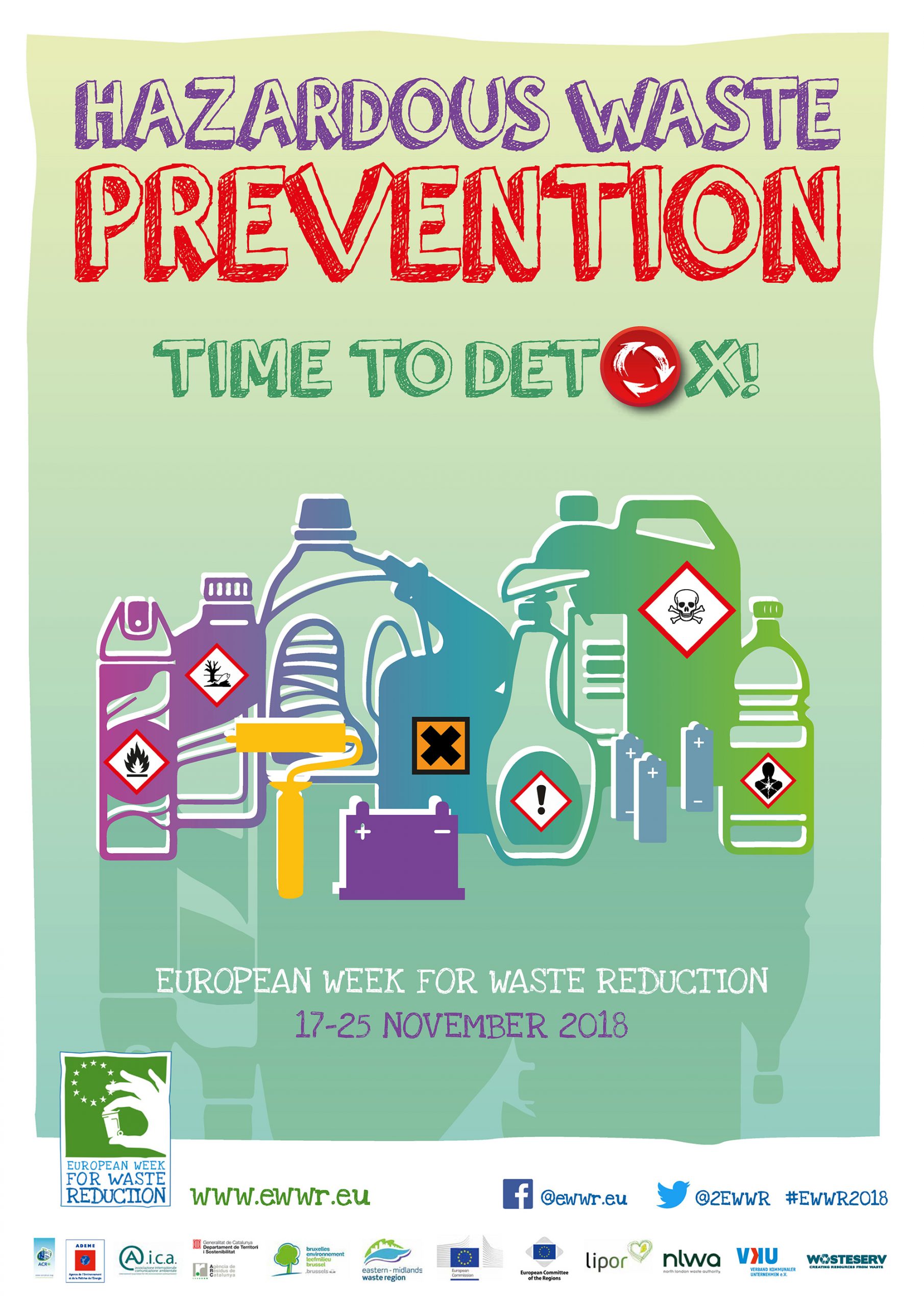
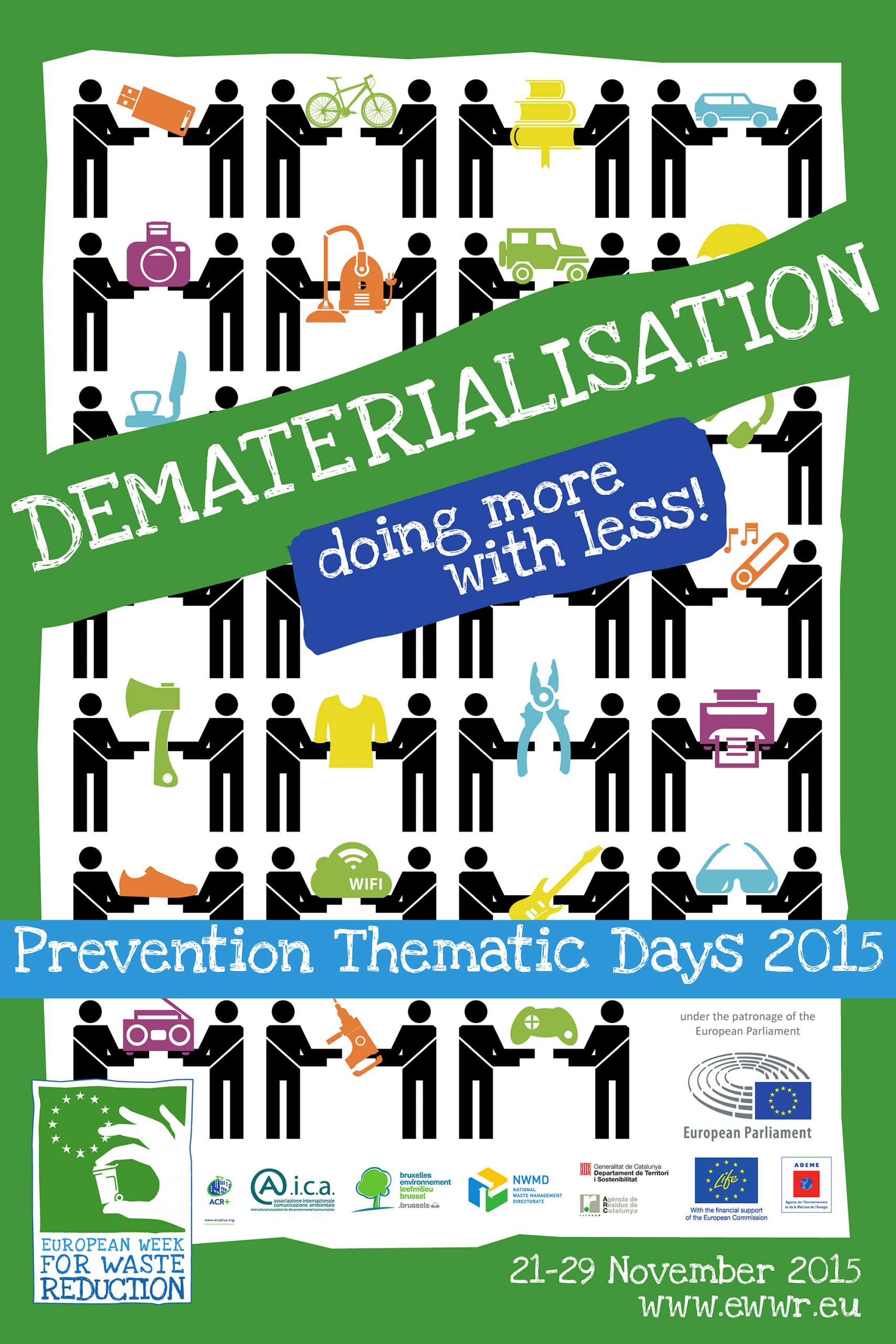
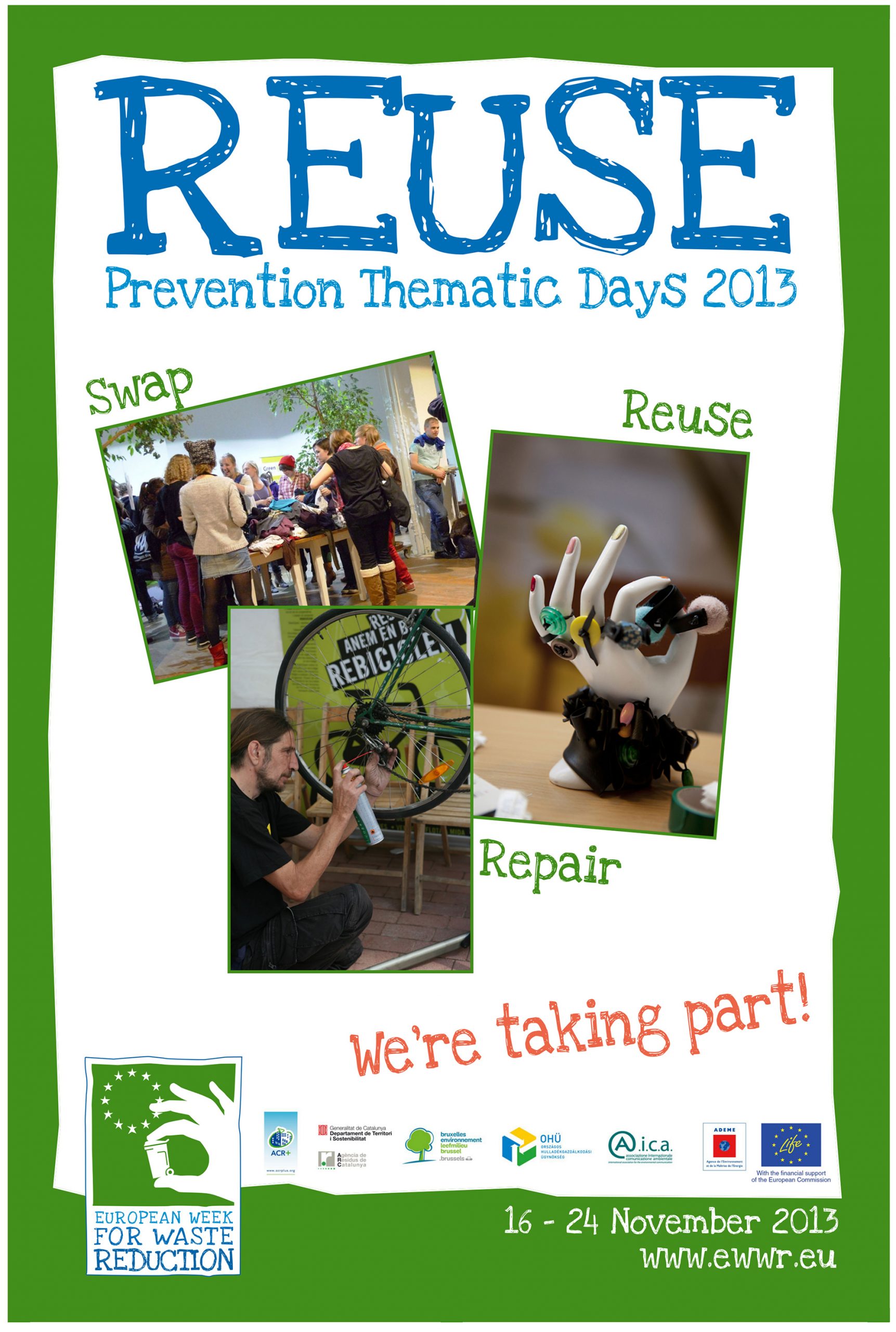
Since 2013, the EWWR addressed many different challenges linked to waste reduction selecting an annual thematic focus: